Alternative fashion’s a rebellious form of self-expression that challenges mainstream clothing norms through distinct subcultures like punk, goth, and grunge. Each style’s got signature looks – punks rock safety pins and ripped denim, goths embrace Victorian darkness with platform boots, while grunge favors oversized flannels and vintage band tees. DIY culture‘s central to alt fashion, promoting sustainability through upcycling and thrifting. These movements blur gender boundaries and transform personal style into powerful statements about identity and creativity.
Key Takeaways
- Alternative fashion rebels against mainstream clothing norms through distinctive subcultures like goth, punk, and grunge with unique visual styles.
- DIY culture empowers individuals to create personalized wardrobes, reject mass-produced fashion, and build creative communities online and offline.
- Each subculture features signature pieces: goths wear black leather and platforms, punks sport ripped denim and safety pins, grunge favors oversized flannels.
- Alt fashion prioritizes sustainable practices through thrifting, upcycling, and ethical production while rejecting fast fashion consumption.
- The movement challenges gender norms by promoting fluid self-expression through clothing choices that defy traditional fashion rules.
The Origins and Evolution of Alternative Fashion Movements
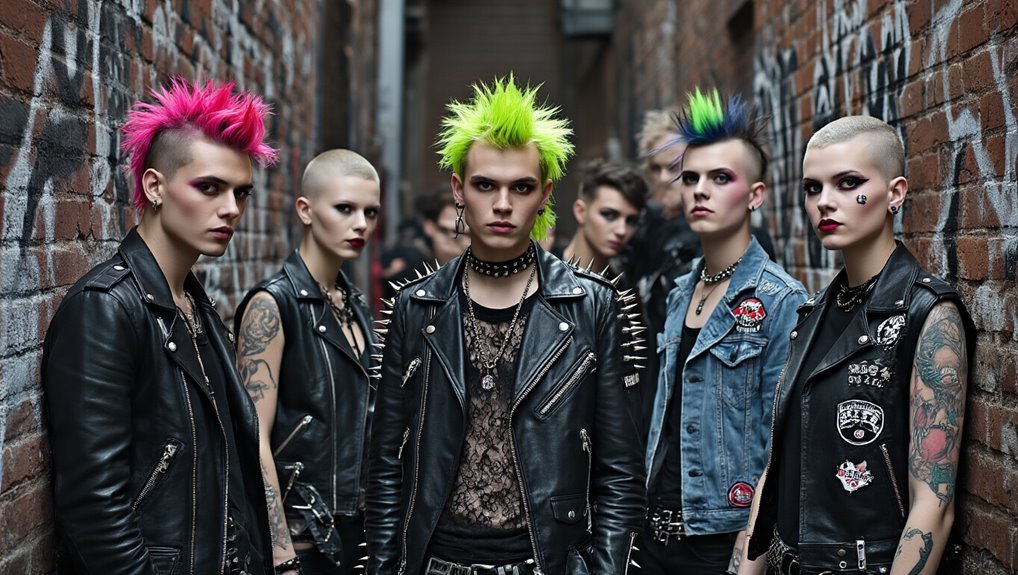
While mainstream fashion has always dictated what’s considered “normal” to wear, alternative fashion movements have consistently emerged as powerful forms of rebellion and self-expression throughout history.

These movements didn’t appear overnight; they’re deeply rooted in various subculture influences that challenged societal norms.
Fashion history shows that alternative styles often began as underground movements before gaining wider recognition. The 1950s saw teddy boys and greasers reject post-war conformity through their distinctive looks.
By the 1970s, punk fashion exploded onto the scene, transforming safety pins and torn clothing into political statements. The 1980s brought goths who embraced darkness through Victorian-inspired aesthetics.
Each movement reflected its generation’s frustrations and desires. They weren’t just about clothes—they represented entire worldviews.
From hippies’ flowing garments symbolizing freedom to cyberpunks’ futuristic gear imagining tomorrow, alternative fashion has continuously evolved, adapting to new cultural contexts while maintaining its core spirit of nonconformity.
Defining Characteristics of Major Alt Fashion Subcultures
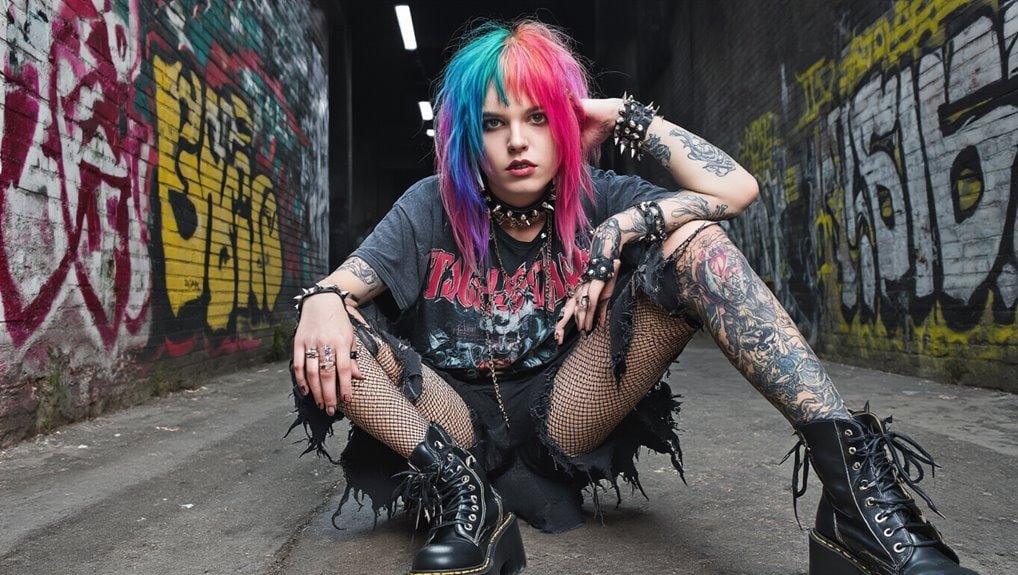
Alternative fashion subcultures each display distinct visual markers that set them apart from mainstream style.
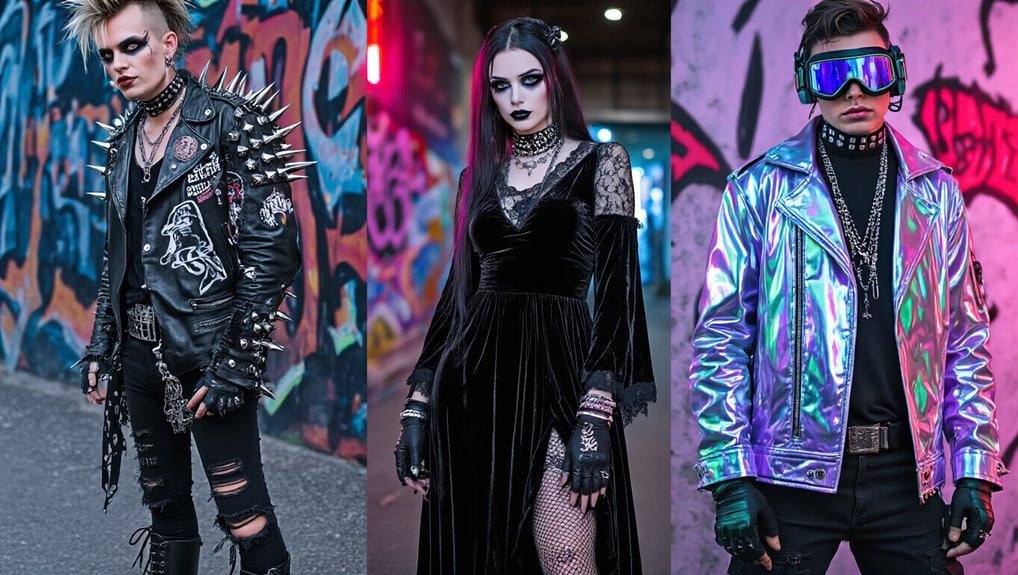
Gothic fashion embraces dark romanticism through black clothing, lace, velvet, and Victorian-inspired silhouettes.
Punk style rebels with ripped fabrics, safety pins, leather jackets, and bold anarchist symbols.
Grunge fashion’s deliberately disheveled aesthetic features oversized flannel shirts, distressed denim, and thrift store finds that reject polished appearances.
Gothic Style Elements
Darkness becomes wearable art in gothic fashion, where Victorian romanticism meets punk rebellion. Gothic architecture influences appear in structured corsets, cathedral-inspired jewelry, and pointed accessories that mirror medieval spires. Dark romanticism themes manifest through lace, velvet, and brocade fabrics adorned with crosses, bats, and occult symbols.
| Element | Traditional Gothic | Modern Gothic |
|---|---|---|
| Colors | Black, deep purple, blood red | Black with neon accents |
| Fabrics | Velvet, lace, leather | PVC, mesh, synthetic materials |
| Accessories | Cameos, crucifixes, chokers | Spiked jewelry, platform boots |
Gothic style’s evolved beyond its 1980s origins, incorporating cyber and industrial elements while maintaining its core aesthetic. Today’s goths blend historical references with contemporary fashion, creating looks that honor tradition while embracing innovation.
Punk Aesthetic Markers
Whether born from working-class frustration or artistic rebellion, punk fashion transforms everyday items into statements of defiance. Safety pins pierce through torn denim and leather jackets, while band patches and political slogans cover every available surface. Mohawks, liberty spikes, and neon-colored hair challenge conventional beauty standards.
Punk’s visual symbolism extends beyond mere shock value. Studded accessories, chains, and combat boots represent armor against societal expectations. DIY modifications like bleaching, slashing, and graffitiing clothes reject consumer culture’s polished aesthetic.
Tartan patterns borrowed from British school uniforms mock authority, while ripped fishnet stockings and bondage straps subvert traditional femininity. These markers don’t just identify punk adherents—they’re weapons of cultural warfare, turning fashion into protest art that continues influencing mainstream design decades later.
Grunge Fashion Signatures
Flannel shirts hang loosely over ripped jeans and worn band tees, creating grunge’s unmistakable silhouette. The flannel revolution erupted in Seattle’s music scene during the early ’90s, transforming thrift store finds into fashion statements.
Grunge icons like Kurt Cobain and Eddie Vedder popularized this deliberately disheveled aesthetic that rejected mainstream fashion’s polished standards.
Essential grunge wardrobe pieces include:
- Oversized flannel shirts in plaid patterns
- Distressed denim with authentic wear
- Combat boots or worn Converse sneakers
- Vintage band merchandise and thermal undershirts
This anti-fashion movement embraced imperfection through layering mismatched textures and muted earth tones.
Grunge’s DIY ethos encouraged secondhand shopping and clothing customization, making high fashion accessible through low-budget creativity.



Essential Wardrobe Pieces for Different Alternative Styles
Building an alternative wardrobe requires knowing which pieces define each subculture’s aesthetic.
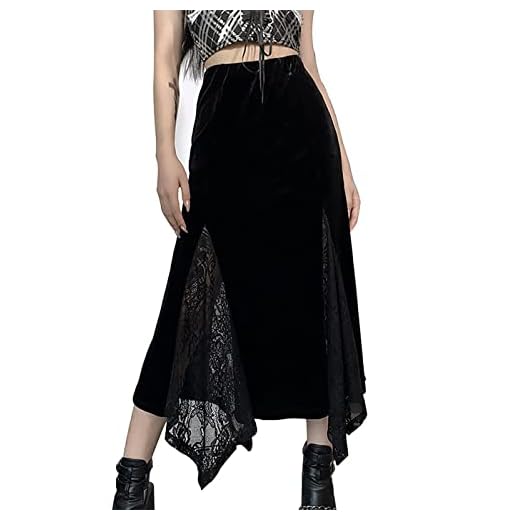
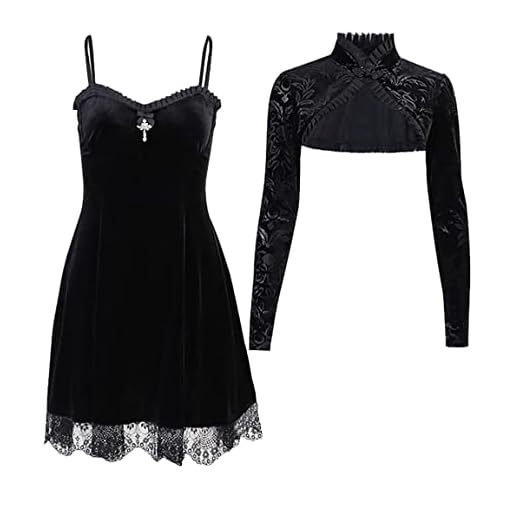
Goth style centers on black clothing items like flowing velvet dresses, leather jackets, platform boots, and silver jewelry featuring crosses or occult symbols.
Punk rock fashion relies on distressed denim, band t-shirts, studded leather accessories, combat boots, and DIY elements like safety pins and patches.
Goth Style Essentials
While alt fashion encompasses numerous diverse aesthetics, goth style remains one of the most iconic and enduring subcultures within the alternative fashion landscape.
Building a gothic wardrobe requires specific foundational pieces that capture the essence of darkness and elegance.
Essential goth wardrobe staples include:
- Black leather or velvet jackets – They’re versatile statement pieces perfect for layering
- Band tees and mesh tops – Classic choices featuring gothic bands or occult imagery
- Platform boots or pointed creepers – Footwear that adds height and dramatic flair
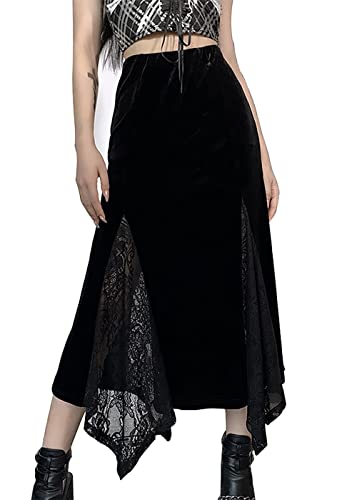
- Flowing black skirts or fitted pants – Bottom pieces in various textures like lace or vinyl
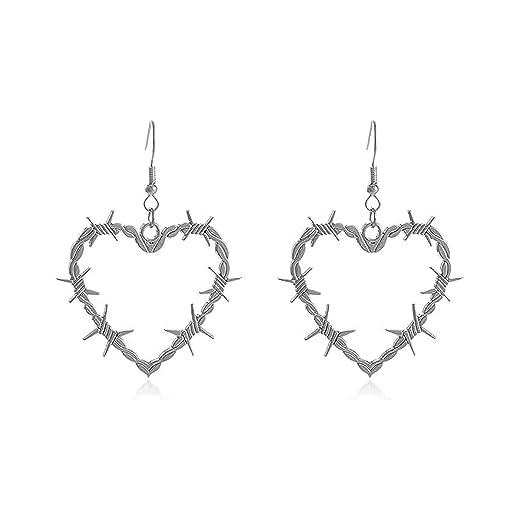
Gothic accessories like silver chains, chokers, and pentagram jewelry complete any outfit.
Dark makeup featuring black lipstick and smoky eyes enhances the mysterious aesthetic that’s central to goth fashion.
Punk Rock Staples
Rebellion runs through every thread of punk rock fashion, creating a style that’s deliberately confrontational and unapologetically raw. Iconic punk fashion emerged in the 1970s as youth rejected mainstream conformity through aggressive aesthetics.
Leather jackets adorned with studs, pins, and patches became armor for cultural warriors. Ripped jeans, held together with safety pins, transformed damage into design statements.
Band t-shirts showcase musical allegiances while combat boots provide both protection and intimidation. Punk rock influences appear in plaid patterns, chains, and DIY modifications.
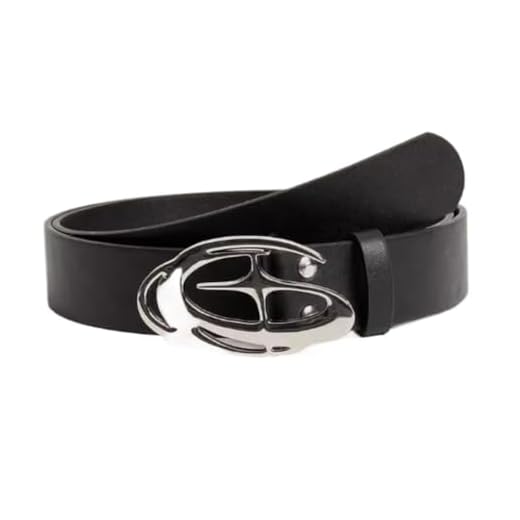
Hair becomes a weapon—mohawks, liberty spikes, and vibrant dyes signal defiance. Accessories include spike-covered chokers, studded belts, and fingerless gloves.
The style’s enduring appeal lies in its accessibility; anyone can tear, pin, and customize their way into authentic punk expression.
DIY Culture and Customization in Alt Fashion
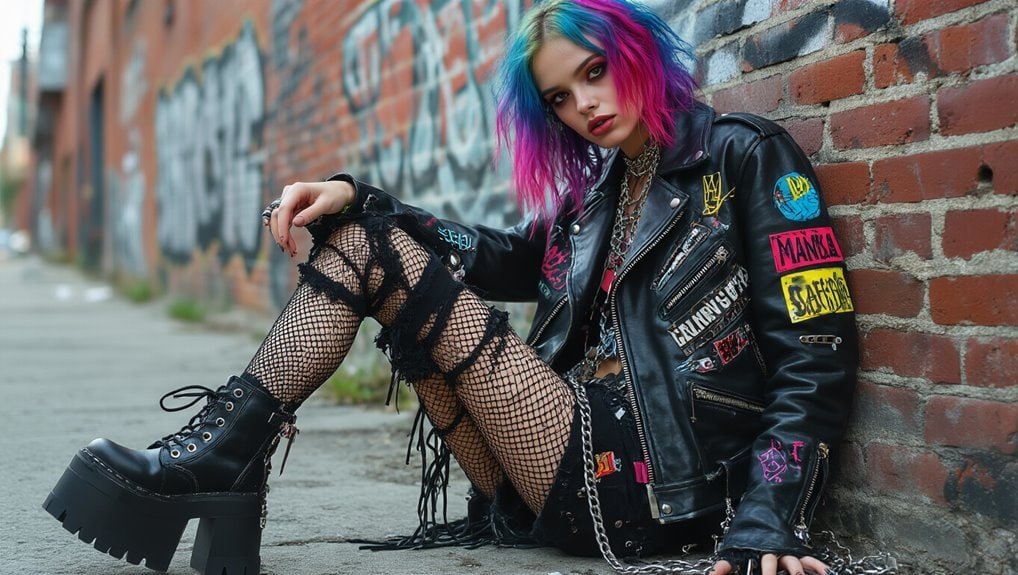
When mainstream fashion doesn’t capture their vision, alt fashion enthusiasts turn to DIY culture as their creative outlet. They transform ordinary clothing into personal statements through various diy techniques that reflect their individuality. This hands-on approach isn’t just about saving money—it’s about creating pieces that can’t be found in any store.
Popular customization ideas include:
- Distressing and bleaching – Creating worn textures with sandpaper, scissors, and chemical treatments
- Patch application – Sewing band logos, political statements, and artistic designs onto jackets and bags
- Studding and safety pinning – Adding metal hardware for an edgier aesthetic
- Screen printing and painting – Applying original artwork directly onto fabric
The DIY movement empowers people to reject mass-produced fashion and build wardrobes that truly represent them.
They’ll spend hours perfecting their craft, sharing techniques online, and inspiring others to pick up scissors and thread.
This culture transforms fashion from passive consumption into active creation.
The Role of Music and Subculture in Shaping Alternative Aesthetics
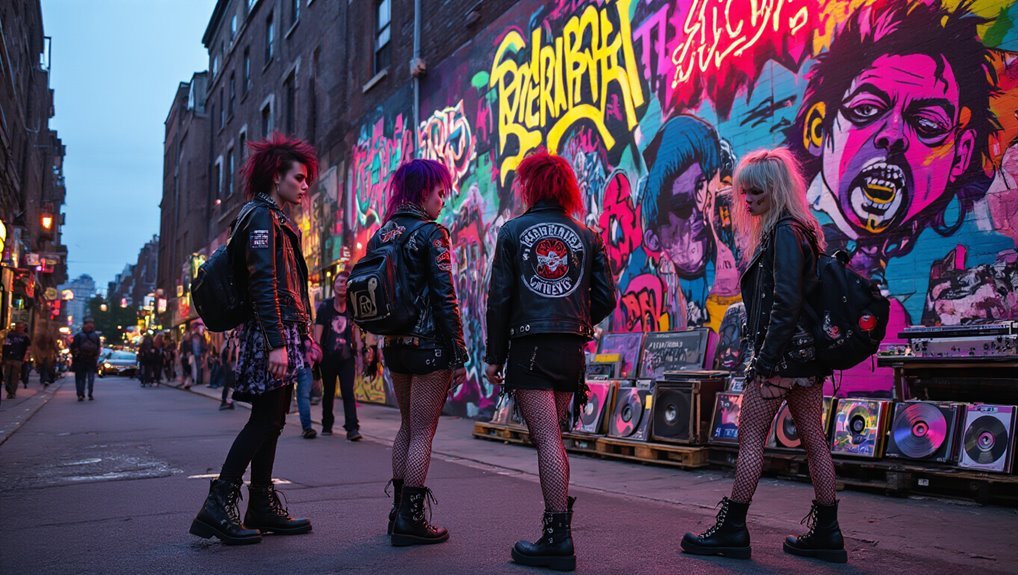
Since the birth of rock ‘n’ roll, music has shaped how alternative communities express themselves through fashion. Punk‘s raw energy birthed ripped jeans, safety pins, and leather jackets. Goth music’s dark romanticism inspired Victorian-influenced wardrobes with lace, velvet, and dramatic makeup. Metal’s aggressive sound translated into band tees, studded accessories, and denim vests.
Music influence extends beyond aesthetics—it creates identity markers that unite fans. When someone sports a Misfits patch or fishnet stockings, they’re signaling membership in specific communities. These visual cues foster instant connections between strangers who share musical tastes.
Subculture impact on fashion goes deeper than copying stage looks. It’s about adopting the values each scene represents. Punk’s DIY ethos encourages thrift shopping and customization. Rave culture’s PLUR philosophy manifests in bright colors and inclusive styles.
As genres evolve and merge, so do their fashion expressions, creating hybrid looks that reflect contemporary alternative identities.
Online Communities and Social Media’s Impact on Alt Fashion
How has the internet transformed alternative fashion from underground movements into global phenomena? Online platforms have revolutionized how alt fashion communities connect and thrive.
Fashion blogs and social influencers now shape aesthetic movements through visual storytelling, while trendsetting hashtags unite subcultures across continents.
Digital fashion’s impact shows through:
- Instagram’s curated feeds showcasing daily alternative outfits
- TikTok’s viral transformation videos inspiring style experimentation
- Discord servers hosting virtual events for niche fashion communities
- Depop and Etsy’s online marketplaces supporting independent alt designers
Community engagement has exploded as creators share tutorials, styling tips, and DIY techniques. Social influencers bridge the gap between underground scenes and mainstream awareness, introducing gothic, punk, and kawaii aesthetics to wider audiences.
Virtual events during the pandemic proved alt fashion’s digital resilience, with online fashion shows and meetups maintaining subcultural connections. These platforms haven’t just preserved alternative fashion—they’ve amplified its reach, turning local scenes into global movements.
Sustainable and Ethical Practices in Alternative Fashion
The digital revolution in alt fashion has sparked another transformation—the movement toward sustainable practices. Alt fashion brands now prioritize eco-friendly sustainable materials like organic cotton, recycled polyester, and deadstock fabrics.
They’re rejecting fast fashion’s wasteful model in favor of quality pieces that last.
Ethical production has become central to the alt fashion ethos. Small labels guarantee fair wages, safe working conditions, and transparent supply chains. Many designers collaborate directly with local artisans and manufacturers, supporting their communities while maintaining quality control.
Vintage and thrift shopping have surged in popularity, with alt fashion enthusiasts embracing secondhand clothing as both environmentally conscious and authentically unique.
DIY culture thrives within sustainable alt fashion. Creators upcycle existing garments, transform thrifted finds, and share tutorials for extending clothing lifespans.
This approach reduces waste while fostering creativity and individuality—core values of alternative fashion that naturally align with environmental responsibility.
Breaking Gender Norms Through Alternative Style
As traditional fashion boundaries dissolve, alt fashion communities lead the charge in dismantling rigid gender expectations through clothing and self-expression. They’ve created spaces where gender fluidity isn’t just accepted—it’s celebrated through bold style expression choices.
Alternative fashion breaks conventional rules:
- Skirts paired with combat boots challenge masculine stereotypes
- Oversized silhouettes blur body shape distinctions
- Makeup becomes genderless artistic expression
- Clothing transcends “men’s” and “women’s” sections
Goth, punk, and grunge subcultures pioneered this movement decades ago, rejecting society’s narrow definitions.
Today’s alt fashion enthusiasts continue pushing boundaries, mixing traditionally gendered elements without hesitation. They’ll combine delicate lace with heavy chains, florals with leather, creating looks that defy categorization.
This freedom attracts individuals seeking authentic self-representation beyond binary constraints.
Through their fearless experimentation, alt fashion communities demonstrate that clothing’s primary purpose isn’t conformity—it’s personal empowerment and creative liberation.
From Underground to Mainstream: How Alt Fashion Influences High Fashion
While alt fashion once thrived exclusively in underground clubs and street corners, major fashion houses now enthusiastically mine these subcultures for their next runway collections. Punk’s safety pins, goth’s corseted silhouettes, and grunge’s distressed aesthetics have all graced haute couture runways.
Iconic designers like Vivienne Westwood and Alexander McQueen built empires by translating street style into luxury pieces. Today’s fashion collaborations between underground artists and mainstream brands blur traditional boundaries. Vetements’ DHL shirts and Balenciaga’s platform Crocs exemplify how subcultures influence contemporary design.
Media representation amplifies this exchange, with Instagram and TikTok accelerating fashion cycles. What takes years to develop organically in underground scenes can appear on runways within months. This rapid appropriation raises questions about cultural appropriation versus appreciation.
Historical influences show this isn’t new—1920s flappers and 1960s mods followed similar trajectories.
Alternative fashion’s journey from margins to mainstream reflects society’s perpetual hunger for authenticity and rebellion, packaged for mass consumption.
Building Your Own Alternative Wardrobe on Any Budget
Creating an alternative wardrobe doesn’t require designer prices or trust funds. Thrift shopping and secondhand style offer endless possibilities for personal expression without breaking the bank.
Budget friendly brands like Depop sellers and vintage finds at flea markets provide authentic pieces that define individual style.
Building a capsule wardrobe focused on versatility maximizes each purchase. Smart shoppers prioritize:
- Black basics that pair with statement pieces
- Unique accessories that transform simple outfits
- Quality fabrics over fast fashion trends
- Bold color combinations that reflect personality
Creative layering transforms basic items into complex looks. A mesh top over a band tee, paired with thrifted leather pants, creates depth without expensive investment.
Accessory focus elevates any outfit—chains, belts, and modified jewelry make striking statements.
Fabric choices matter more than labels. Velvet, lace, and distressed denim from secondhand sources rival designer materials.
Alternative fashion thrives on imagination, not credit limits.
Frequently Asked Questions
How Do I Handle Negative Reactions From Family About My Alternative Style?
When someone faces negative reactions from family about their choices, they’ll find that open communication often helps.
They should express how personal expression matters to their identity while acknowledging family concerns.
It’s important they set boundaries respectfully but firmly.
Finding common ground becomes easier when they share why these choices bring happiness.
Sometimes family support grows gradually as relatives see their confidence and authenticity shine through their decisions.
Can I Dress Alt Fashion Professionally at Work or Job Interviews?
They’ll find that many workplaces now welcome diverse professional attire, including alternative styles.
Interview tips include researching company culture beforehand and choosing subtle alt elements like dark colors or minimal accessories.
They can incorporate their style through structured pieces – a blazer over band tee or oxford shoes with chains.
Starting conservatively then gradually expressing more personality once they’ve established credibility often works best in corporate environments.
What Are the Best Cities or Neighborhoods for Alt Fashion Communities?
Major alternative fashion hubs like Tokyo’s Harajuku district and London’s Camden Town attract creative dressers worldwide.
New York’s East Village and Berlin’s Kreuzberg neighborhood showcase unique fashion districts where experimental styles thrive.
Portland, Seattle, and Los Angeles also host vibrant alt communities.
These cities embrace diverse aesthetics, offering vintage shops, independent designers, and underground fashion events that support self-expression through clothing.
How Do I Transition From Mainstream Fashion to Alternative Styles Gradually?
One’s style evolution doesn’t need to happen overnight.
They’ll find success by gradually incorporating pieces that speak to their personality while maintaining wardrobe staples. Starting with accessories like unique jewelry or bags, they can experiment without committing fully.
Mixing statement pieces with basics creates balance. They’ll discover their authentic aesthetic by trying different combinations, keeping what feels right, and slowly replacing conventional items with pieces that truly represent them.
Where Can I Find Size-Inclusive Alternative Fashion Brands and Retailers?
They’ll discover several size inclusive brands through online alternative retailers like Killstar, Torrid, and Rebirth Garments.
Independent designers on Etsy often create custom-sized pieces.
They can explore Hot Topic’s extended sizing, ASOS Design’s curve collection, and Dolls Kill’s plus range.
Social media platforms showcase smaller brands specializing in gothic, punk, and streetwear styles.
They shouldn’t overlook thrift stores and DIY options for unique, perfectly-fitted alternative pieces.
Conclusion
Alt fashion’s journey from rebellious underground movements to influential cultural force proves that style’s more than clothing—it’s self-expression. Whether someone’s drawn to punk’s raw edge, goth’s dark romanticism, or any alternative aesthetic, they’re joining a legacy of creative rebels who’ve challenged mainstream norms. As these styles continue evolving, they’ll keep inspiring individuals to craft unique identities, support ethical practices, and prove that fashion’s most powerful when it breaks the rules.

 Amazon.com


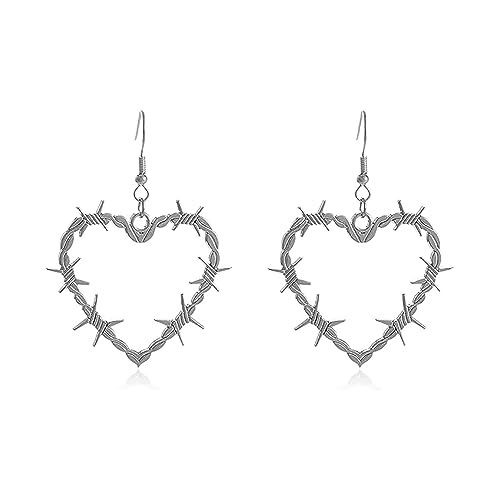
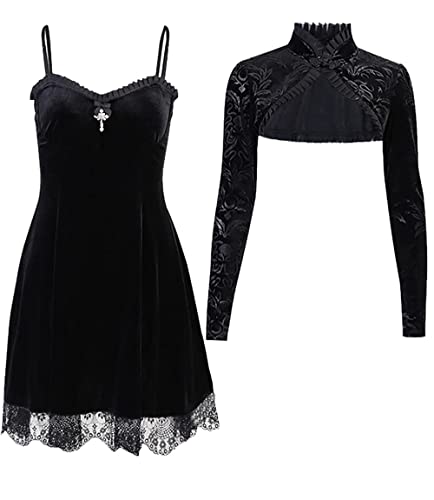






I’ve Been In My Alt Era. Here’s How I Achieve the Look & Lifestyle Refinery29...
Dry Your Eyes, Quiet Luxury—Alternative Fashion Is Ruling Spring Who What Wear...
Is Alt Really Back? The Rampage Online...
A Fashion Week Not Quite Like the Rest The New York Times...
Trans fashion representations on campus theslateonline.com...
The 12 alternative fashion seasons for 2025 The Times...
The Black girls reclaiming alternative fashion CNN...
How Catholicism became alt-fashion’s saviour i-D Magazine...
Students Get Creative With Alternative Fashion Trends Pepperdine Graphic...
Five Alternative Stars in the World of Fashion Capitals Design Hotels...