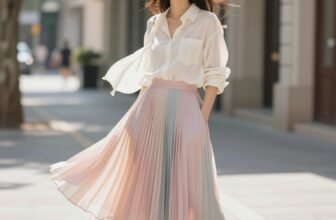
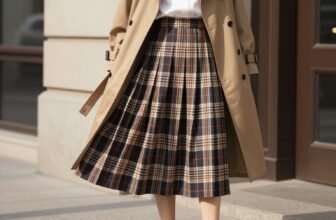
The 1990s rejected fashion’s excess, embracing clean lines, neutral palettes, and architectural precision. Designers like Jil Sander and Helmut Lang pioneered this anti-fashion movement, creating slip dresses, structured tailoring, and deconstructed silhouettes in black, white, and beige. Premium fabrics replaced flashy synthetics while Japanese zen aesthetics influenced asymmetrical cuts. This minimalist revolution transformed luxury’s definition from embellishment to restraint, establishing principles that still shape contemporary wardrobes today.
Key Takeaways
- Clean lines, precise cuts, and geometric silhouettes defined 90s minimalism, emphasizing structure over embellishment.
- Calvin Klein, Jil Sander, and Helmut Lang pioneered the movement with architecturally precise, understated designs.
- Neutral color palettes dominated: black, white, beige, gray, and taupe enabled effortless mixing and matching.
- Premium natural fabrics like cotton, silk, cashmere, and crisp poplin replaced flashy 80s synthetics.
- The anti-fashion movement emerged from the economic downturn, promoting restraint and quality over excess and embellishment.
The Rise of Anti-Fashion in the 1990s
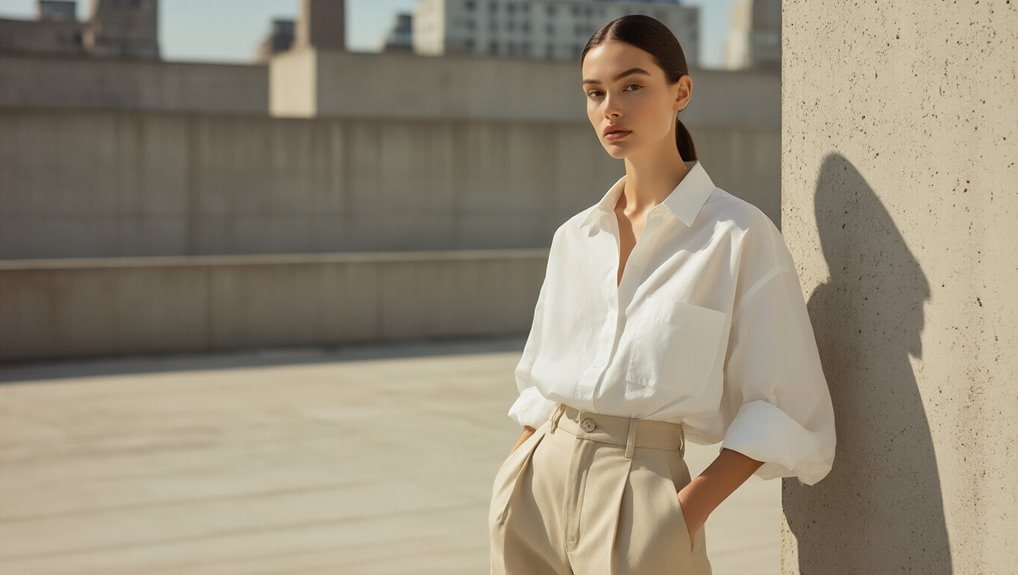
While fashion in the 1980s celebrated excess through power suits, bold shoulders, and ostentatious logos, the 1990s ushered in a radical shift toward restraint and simplicity. This anti-fashion movement rejected traditional luxury markers and embraced understated elegance.

Designers like Jil Sander and Helmut Lang pioneered clean lines and neutral palettes, stripping away unnecessary embellishments.
The grunge influence from Seattle’s music scene accelerated this transformation. Bands like Nirvana popularized thrift store finds and worn-in basics, making disheveled looks deliberately fashionable. This aesthetic challenged haute couture’s dominance and democratized style.
Street style became fashion‘s new laboratory. Young people mixed high-end pieces with vintage finds, creating personalized looks that defied categorization.
Fashion editors began documenting sidewalk trends, recognizing that innovation wasn’t confined to runways. This bottom-up approach redefined how trends emerged and spread, establishing minimalism as both a design philosophy and cultural statement that would define the decade.

Key Designers Who Pioneered Minimalist Style
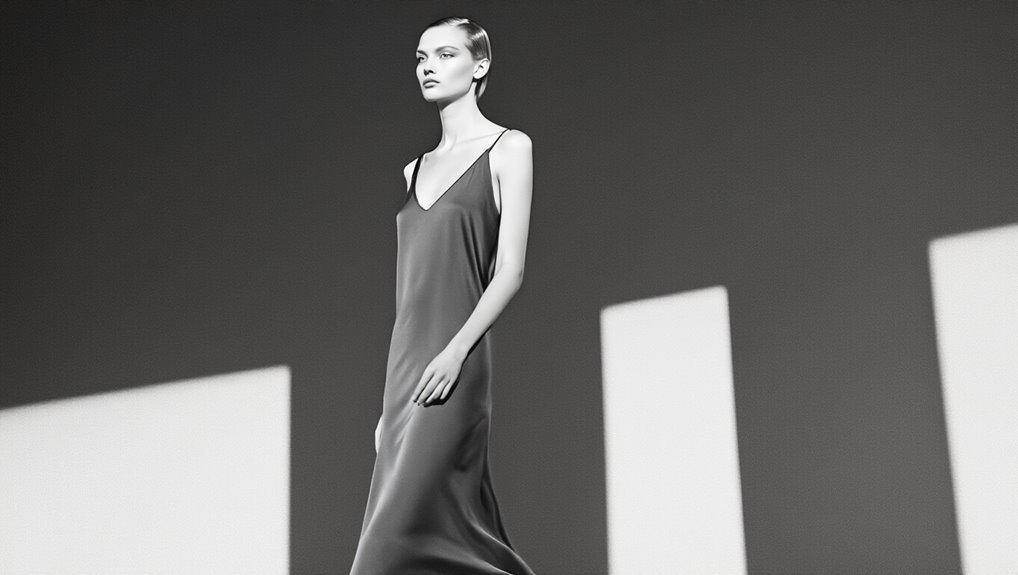
When Calvin Klein launched his groundbreaking Fall 1993 collection, he stripped fashion down to its essence—simple slip dresses, minimal tailoring, and a palette of beige, gray, and black that shocked critics accustomed to ornate runway spectacles.
Klein’s radical restraint became the decade’s defining aesthetic, transforming how consumers viewed luxury.
Across the Atlantic, Jil Sander earned the title “Queen of Less” by creating architecturally precise garments that eliminated unnecessary details.
Her luxurious fabrics and impeccable construction proved that minimalism wasn’t about deprivation but sophistication.
Sander’s stark showrooms and monochromatic collections influenced an entire generation of designers.
Helmut Lang pushed boundaries further, introducing industrial materials and deconstructed silhouettes that challenged traditional notions of elegance.
Meanwhile, Prada’s Miuccia Prada subverted expectations with her nylon backpacks and streamlined designs that made intellectualism fashionable.
These pioneers didn’t just create clothes—they revolutionized fashion’s visual language, proving that sometimes the most powerful statement comes from saying less.


Essential Elements of ’90s Minimalist Wardrobes
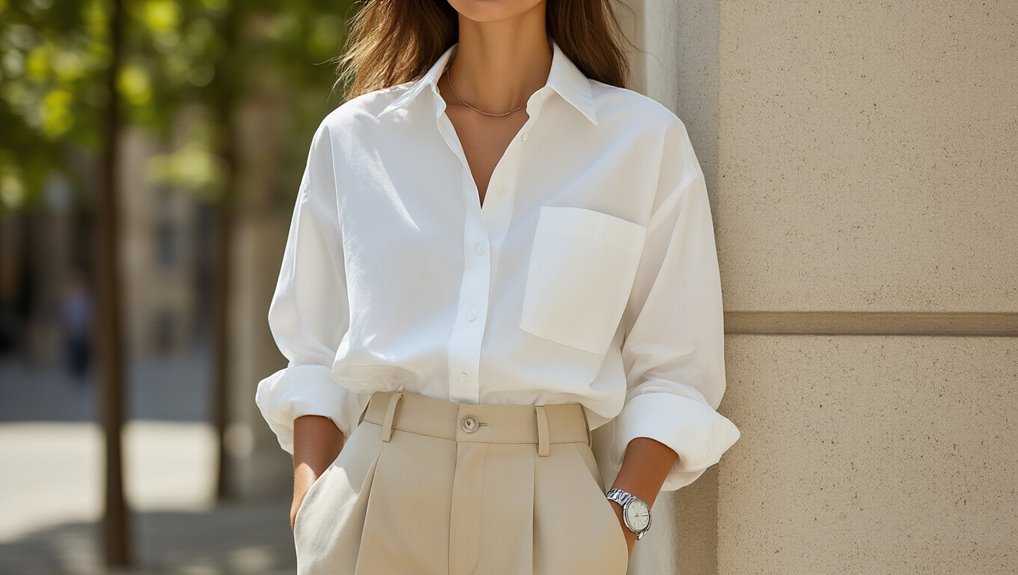
The ’90s minimalist wardrobe centered on two fundamental principles that defined the era’s aesthetic.
Clean lines and precise cuts created garments that emphasized structure over embellishment, with designers favoring geometric shapes and streamlined silhouettes.
These pieces came exclusively in neutral color palettes—blacks, whites, grays, and beiges—that allowed for effortless mixing and matching while maintaining the movement’s signature understated elegance.
Clean Lines and Cuts
Sharp, geometric silhouettes defined the minimalist movement of the ’90s, as designers stripped away excess to reveal fashion’s purest forms. Clean silhouettes became the decade’s signature, with straight-leg trousers, boxy blazers, and shift dresses dominating runways and streets alike.
Structured tailoring transformed simple garments into architectural statements—shoulders sat naturally without padding, while seams followed the body’s lines precisely.
Designers like Jil Sander and Calvin Klein championed pieces that hung effortlessly from the body, creating space between fabric and skin. They eliminated decorative details, focusing instead on perfect proportions and impeccable construction.
Hemlines fell straight, necklines stayed simple, and sleeves maintained consistent widths. This approach wasn’t about hiding the body but celebrating its natural form through thoughtful design that prioritized function and elegance.
Neutral Color Palettes
Minimalist designers of the ’90s built their collections around a carefully curated spectrum of neutrals that transformed restraint into luxury. They championed black, white, gray, beige, and navy as the foundation of sophisticated dressing.
This neutral style wasn’t about playing it safe—it was a deliberate rejection of the excess that defined the ’80s.
Calvin Klein, Jil Sander, and Helmut Lang mastered these color combinations, proving that tonal dressing could be both powerful and nuanced. They’d layer cream with ecru, pair charcoal with slate, or combine ivory with sand to create depth without distraction.
These palettes let the wearer’s personality shine through while maintaining an air of effortless elegance. The approach revolutionized how people thought about building a wardrobe, emphasizing quality over quantity and timelessness over trends.
The Neutral Color Palette Revolution
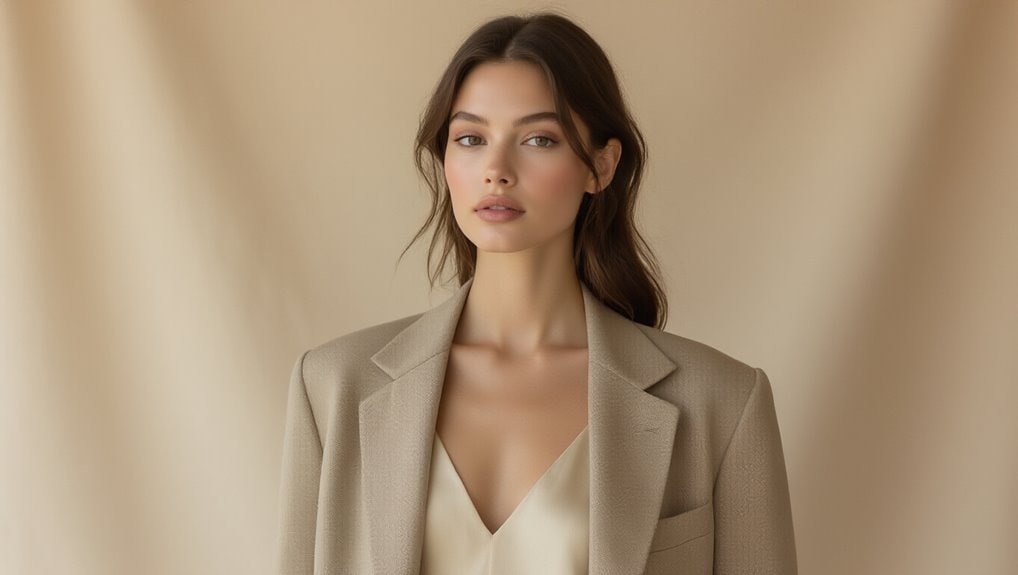
Most fashion historians agree that 90s minimalism fundamentally transformed how designers and consumers viewed color in clothing. The decade’s rejection of 80s excess sparked a revolutionary shift toward beige monochrome and soft neutrals that defined an entire era.
| Color Category | Popular 90s Shades |
|---|---|
| Whites | Ivory, cream, pearl |
| Browns | Taupe, camel, sand |
| Grays | Charcoal, dove, ash |
| Blacks | Jet, onyx, carbon |
Calvin Klein, Jil Sander, and Helmut Lang championed this stripped-down aesthetic, proving that sophistication didn’t require bold hues. Their collections featured seamless gradations of neutral tones that created visual harmony without sacrificing impact.
The movement’s influence extended beyond high fashion. Retailers quickly adopted the palette, making minimalist dressing accessible to mainstream consumers. This color revolution wasn’t just about aesthetics—it represented a cultural shift toward intentionality and restraint that would influence fashion for decades to come.
Signature Silhouettes and Clean Lines
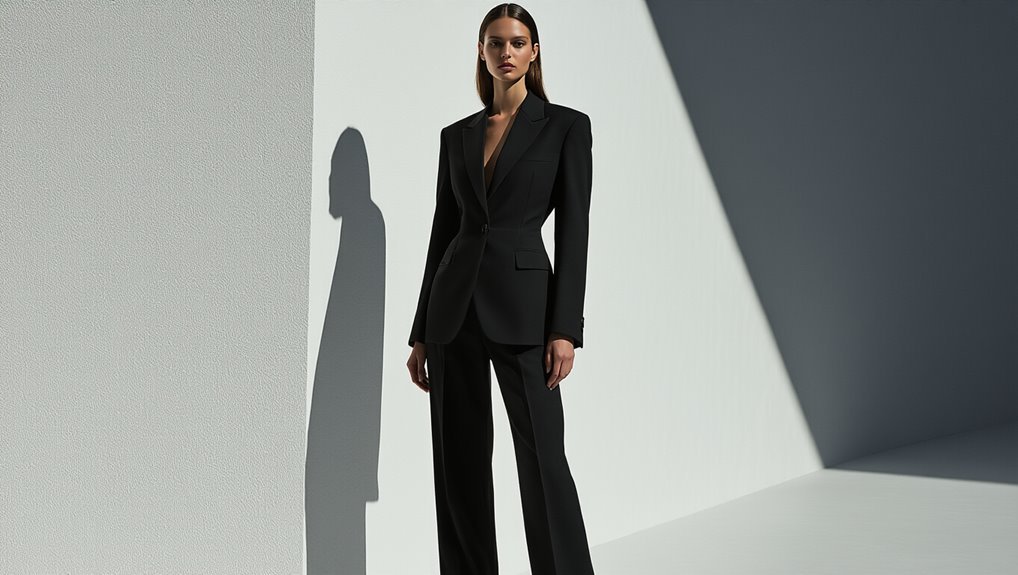
Beyond the restrained color palette, 90s minimalism‘s true power lay in its revolutionary approach to shape and structure. Designers stripped away excess ornamentation, creating iconic pieces that celebrated pure form. Sharp blazers featured precise shoulders and straight cuts, while slip dresses draped effortlessly along the body’s natural lines. T-shirts weren’t just basics—they became architectural statements with perfect proportions and impeccable draping.
This style evolution marked a departure from the power dressing of the 80s. Instead of exaggerated silhouettes, minimalist fashion embraced understated elegance through meticulous tailoring. Straight-leg trousers replaced pleated styles, while A-line skirts offered clean geometry.
Even outerwear reflected this philosophy—coats featured minimal buttons, hidden closures, and streamlined shapes that moved seamlessly with the wearer. The focus shifted from decoration to construction, proving that sophistication didn’t require embellishment.
These signature silhouettes became the foundation of modern wardrobes, influencing how people approach dressing today.
Fabrics and Textures That Defined the Movement
Luxurious materials became the quiet heroes of 90s minimalism, transforming simple designs into sophisticated statements. Designers favored premium cotton blends that draped effortlessly, creating clean lines without sacrificing comfort.
These fabrics moved with the body, maintaining their shape while offering breathability and durability. Silk textures added refinement to the minimalist palette. Slip dresses in bias-cut silk became iconic pieces, their fluid movement contrasting beautifully with structured wool blazers.
Cashmere knits provided tactile luxury without embellishment, while crisp poplin shirts delivered sharp precision. The era’s fabric choices reflected its philosophy: quality over quantity.
Matte finishes dominated, rejecting the flashy synthetics of the 80s. Natural fibers in neutral tones—black, white, beige, and gray—formed the foundation. These materials didn’t shout; they whispered elegance.
The absence of prints or patterns meant fabric quality couldn’t hide behind distractions. Every thread count mattered, every weave contributed to the garment’s integrity.
How ’90s Minimalism Challenged Traditional Luxury
The quiet revolution of 90s minimalism turned fashion’s definition of luxury on its head. Where traditional luxury meant ornate embellishments, bold logos, and ostentatious displays of wealth, minimalist designers proposed something radical: that true sophistication came from restraint.
Brands like Jil Sander and Helmut Lang championed luxury redefined through impeccable tailoring and premium materials rather than flashy hardware. They stripped away excess to reveal simplistic elegance—a $500 white shirt that looked deceptively simple but featured perfect proportions and exquisite construction.
This movement challenged fashion houses that’d built empires on visible branding. Suddenly, wearing head-to-toe logos seemed gauche compared to the understated confidence of a perfectly cut black dress.
The minimalists proved that luxury didn’t need to shout; it could whisper through flawless seams and sublime fabrics. Their philosophy transformed how consumers viewed high-end fashion, establishing that less could indeed be more expensive—and more desirable.
Cultural Influences Behind the Pared-Down Aesthetic
The economic downturn of the early ’90s forced consumers to reconsider their spending habits, making simple, versatile pieces more appealing than logo-heavy designer goods.
Japanese designers like Yohji Yamamoto and Rei Kawakubo had already introduced Western markets to zen-inspired aesthetics that valued space, proportion, and understated elegance.
This timing created the perfect storm for a cultural backlash against the flashy materialism of the ’80s, as people embraced clothing that whispered rather than shouted.
Economic Recession Impact
When recession gripped the early 1990s economy, fashion’s response proved swift and decisive—stripping away excess became both practical necessity and cultural statement.
Economic uncertainty reshaped consumer behavior as unemployment rose and disposable income plummeted. Designers couldn’t ignore market realities—elaborate embellishments and costly materials disappeared from runways.
Fashion affordability became paramount. Brands pivoted toward versatile basics that promised longevity over trend-driven pieces. Calvin Klein, Jil Sander, and Helmut Lang championed clean lines and neutral palettes that transcended seasons. Their collections reflected society’s shift toward mindful consumption.
The recession didn’t just influence price points—it fundamentally altered fashion’s philosophy. Minimalism emerged as both an economic strategy and an aesthetic rebellion against the 1980s’ conspicuous consumption.
This period proved that financial constraints could spark creative innovation.
Japanese Design Philosophy
Beyond Western economic pressures, Japanese designers brought revolutionary perspectives to 1990s fashion that redefined minimalism’s core principles. Pioneers like Yohji Yamamoto and Rei Kawakubo introduced Wabi Sabi‘s philosophy of finding beauty in imperfection and simplicity. Their deconstructed silhouettes celebrated asymmetry, raw edges, and unconventional proportions that challenged traditional Western glamour.
The Zen influence manifested through designers’ emphasis on negative space, creating garments where absence became as important as presence. They favored monochromatic palettes—predominantly black, white, and gray—that directed focus toward form and texture rather than color.
Japanese minimalism rejected excess ornamentation, instead highlighting fabric quality and precise tailoring. This Eastern approach transformed how Western fashion understood restraint, proving that reduction could be radical rather than boring.
Anti-Excess Cultural Movement
As consumer culture reached its zenith in the late 1980s, a collective exhaustion with materialism sparked minimalism’s rise across art, architecture, and fashion.
The anti-excess philosophy emerged as designers rejected logo-heavy clothing and ostentatious displays of wealth. This cultural backlash reflected society’s growing discomfort with rampant consumerism and environmental waste.
Fashion houses responded by stripping away embellishments, focusing instead on clean lines and quality construction.
The movement wasn’t just aesthetic—it represented a fundamental shift in values. Consumers who’d spent the ’80s accumulating designer goods now craved simplicity and authenticity.
This rejection of excess aligned with broader cultural movements questioning capitalism’s promises, making minimalism both a style choice and a statement against overconsumption.
Modern Interpretations of ’90s Minimalist Trends
Contemporary fashion houses have reimagined ’90s minimalism through a sophisticated lens that embraces both restraint and innovation.
Today’s designers merge clean lines with technical fabrics, creating garments that honor the original movement while addressing current lifestyle demands. Brands like The Row and Jil Sander champion this aesthetic, producing collections that prioritize quality construction and timeless silhouettes.
Modern accessories play a significant role in updating minimalist wardrobes. Geometric bags, architectural jewelry, and streamlined footwear complement pared-down outfits without overwhelming them. These pieces serve as subtle focal points that enhance rather than compete with clothing.
Sustainable practices have become integral to contemporary minimalism. Designers now emphasize durability and ethical production, aligning with the movement’s anti-consumerist roots.
They’re using organic materials, implementing zero-waste techniques, and creating seasonless collections that reject fast fashion’s disposability. This evolution transforms ’90s minimalism from purely aesthetic choice to conscious lifestyle philosophy.
Building a Contemporary Minimalist Wardrobe
Creating a minimalist wardrobe starts with understanding core principles rather than following strict rules. Today’s approach emphasizes quality over quantity, focusing on versatile pieces that work seamlessly together. Building wardrobe essentials means selecting items that’ll stand the test of time both in construction and style.
The foundation relies on neutral colors and clean lines. White shirts, black trousers, and well-fitted jeans form the backbone of capsule collections. These pieces mix and match effortlessly, creating multiple outfits from fewer items.
| Category | Essential Items | Key Features |
|---|---|---|
| Tops | White tee, black shirt | Cotton, fitted cuts |
| Bottoms | Dark jeans, tailored pants | Classic silhouettes |
| Outerwear | Blazer, trench coat | Neutral tones |
Smart shopping means investing in better materials rather than trend-driven pieces. A contemporary minimalist wardrobe doesn’t restrict creativity—it enhances it by removing decision fatigue and ensuring everything coordinates perfectly.
Frequently Asked Questions
How Much Did Minimalist Pieces Typically Cost in the 1990s?
Minimalist clothing pieces varied widely in cost during the 1990s.
Designer brands like Calvin Klein, Jil Sander, and Helmut Lang charged premium prices, with dresses costing $500-$2,000 and coats reaching $3,000.
However, mainstream retailers offered affordable alternatives.
Gap and Banana Republic sold minimalist basics for $30-$150.
The price comparison between high-end and mass-market options meant consumers could achieve the clean, simple aesthetic at different budget levels.
Where Can I Find Authentic Vintage ’90s Minimalist Clothing Today?
They’ll discover authentic vintage pieces through various channels.
Online marketplaces like eBay, Depop, and Etsy offer extensive selections from individual sellers and vintage boutiques.
Local thrift store finds often yield unexpected treasures at bargain prices.
They’re checking consignment shops in upscale neighborhoods for designer pieces.
Specialized vintage stores curate collections specifically from that era.
They’re also browsing estate sales and flea markets where original owners sell pristine condition items.
Which Celebrities Best Embodied the ’90s Minimalist Fashion Aesthetic?
Several celebrities perfectly captured the essence of understated elegance during that era.
Kate Moss became the ultimate poster child for this aesthetic, often photographed in simple slip dresses and basic tees. She’s frequently associated with Calvin Klein campaigns that defined the look.
Gwyneth Paltrow also embraced clean lines and neutral tones, while Carolyn Bessette-Kennedy’s refined wardrobe exemplified how minimalism could look effortlessly sophisticated and timeless.
How Do I Care for and Maintain Minimalist Garments Properly?
One should prioritize proper fabric care to extend garment life.
They’ll need to check care labels before washing, as different materials require specific techniques. Cold water washing prevents shrinkage and color fading.
They shouldn’t overload machines or use excessive detergent. Air drying works best for delicate items.
Regular steaming removes wrinkles without damaging fibers. Proper storage on quality hangers and folded knits in drawers maintains shape and prevents stretching.
What Accessories Complemented the 90S Minimalist Fashion Style?
Fashion enthusiasts know that layered necklaces and simple earrings perfectly complement minimalist aesthetics.
They’ll find that delicate chains worn together create visual interest without overwhelming clean lines. Small hoops or studs don’t distract from streamlined silhouettes.
During the 90s minimalist era, accessories stayed deliberately understated – thin metal watches, structured leather bags, and slim belts enhanced outfits.
These pieces added polish while maintaining the movement’s essential simplicity and restraint.
Conclusion
The ’90s minimalist movement wasn’t just a trend—it’s become fashion’s enduring philosophy. By rejecting excess and embracing simplicity, designers created a timeless aesthetic that still influences today’s wardrobes. Clean lines, neutral palettes, and quality fabrics proved that less truly is more. As fashion cycles continue spinning, the principles of ’90s minimalism remain relevant, offering a blueprint for conscious consumption and effortless style that transcends decades and seasonal fads.


 Amazon.com
 Amazon.com
 Amazon.com
 Amazon.com
 Amazon.com






Nineties minimalism is bigger than ever, according to NYFW Harper's BAZAAR...
36 Throwback Photos Of Sofia Coppola, The Queen Of ’90s Minimalism Vogue...
If You Like '90s Minimalism, You’ll Love These Brands lyst.com...
'90s Minimalism Is My Summer Aesthetic—This Is My Capsule Wardrobe Who What Wear...
Gwyneth Paltrow’s Minimalist ’90s Style Was Unmatched British Vogue...
How Carolyn Bessette-Kennedy’s Effortless Minimalism Became the Uniform Everyone’s Copying marieclaire.com...
Zoë Kravitz Channels ’90s Minimalism at the 'Caught Stealing' Premiere W Magazine...
Tracking Jennifer Aniston’s Style Evolution From '90s Minimalist to Timeless Icon Marie Claire UK...
Thrifted bootcuts to blinged-out bags, the soon-to-be trends of 2025 The State Press...
How To Recreate Carolyn Bessette-Kennedy's Impeccable Nineties Style ELLE...