An iPhone cover with a strap frees the hands while keeping the phone secure and easy to reach for commuting, travel, errands. It’s available in leather, silicone, fabric and hybrid builds that balance style with protection. Straps come wrist‑short to crossbody long, with reinforced anchors and quick‑release clips for safety. Users can easily pick lengths and materials to suit their routine, they’ll find tips on styling, maintenance and where to buy if they want more.
Key Takeaways
- A strap case frees your hands and keeps your iPhone instantly accessible for calls, transit cards, and quick photos.
- Choose materials like leather, silicone, fabric, TPU, or hybrid for differing protection, grip, and style.
- Look for secure anchors: reinforced loops, metal rings, carabiner clips, or integrated rail systems to prevent accidental drops.
- Measure preferred carry style (wrist, shoulder, crossbody) to select the correct strap length and adjustability.
- Prices range from about $10–$60; test attachment points and hardware quality before buying for long-term reliability.
Benefits of Using a Strap Case
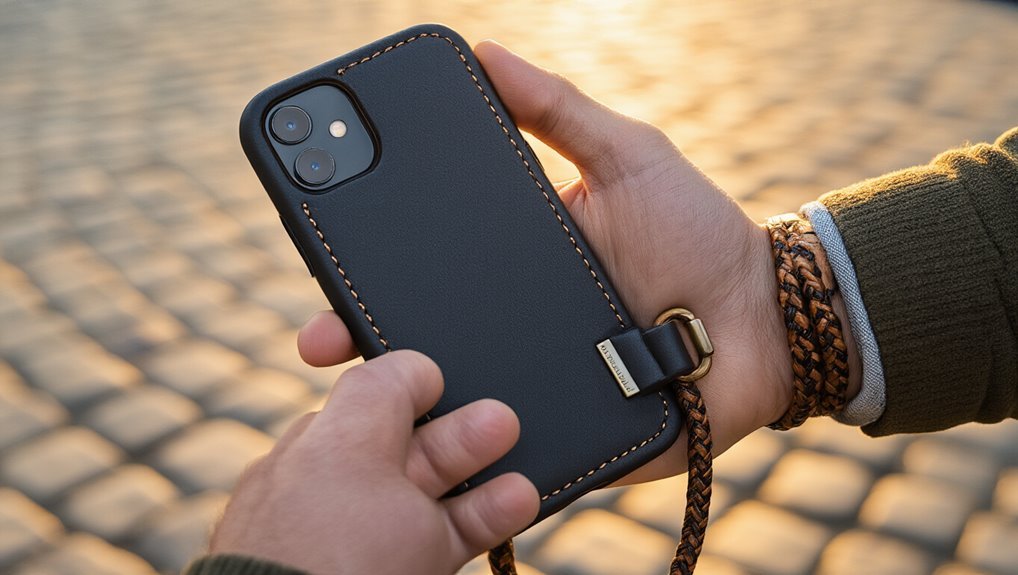
Though it keeps the phone within easy reach, a strap case does more than hang on the shoulder. It frees hands, simplifies quick access, and reduces pocket bulge, so someone can move through daily tasks without constant fumbling.
Commuters and travelers find strap case benefits in reduced drop risk and faster retrieval for calls or transit tickets. Caregivers and parents appreciate that the phone stays accessible yet out of the way during errands.
Many designs add secure clasps and adjustable lengths, delivering enhanced phone security against snags and accidental slippage. Wearers also gain situational convenience: the phone stays visible for notifications but won’t get buried in bags.
Because it sits confidently on the body, a strap case cuts the chance of leaving a device behind. It’s a pragmatic accessory that balances accessibility with protection, giving users everyday confidence without sacrificing comfort or mobility. It suits active modern lifestyles.
Styles and Materials Compared
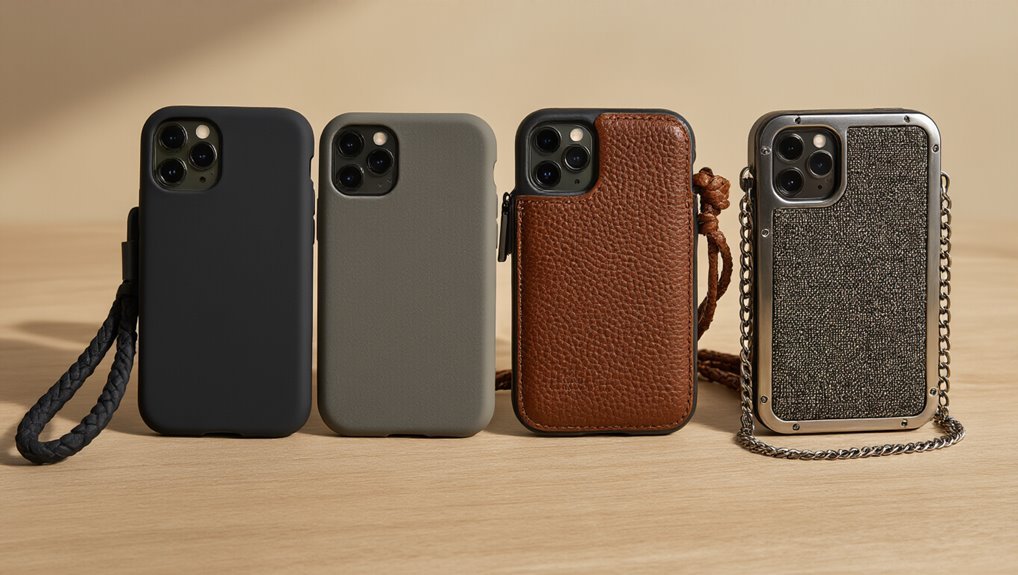
The article compares popular strap-case styles—leather, silicone, fabric, TPU, and hybrid—so readers can weigh appearance against function.

Leather offers a premium look while silicone and fabric focus on grip and comfort.
TPU emphasizes shock absorption, and hybrids blend those strengths.
It also notes that no single material suits every user, so buyers shouldn’t expect one-size-fits-all performance.
Leather Vs Silicone
Two materials dominate strap-equipped iPhone covers: leather and silicone, each offering distinct trade-offs in appearance, grip, and longevity.
Leather conveys a premium look, resists scratches, and develops character over time; reviewers note leather durability for users who prefer classic styling and aging that’ll feel intentional.
Silicone emphasizes shock absorption and a tacky surface that improves hold; designers praise silicone flexibility for molded straps that stretch without tearing.
Leather straps suit formal settings and handle spills with careful cleaning, while silicone straps stand up to daily rough use and wet conditions.
Buyers weigh aesthetics versus practicality: leather for refined presence and gradual wear, silicone for resilient protection and easy maintenance in active lifestyles.
Manufacturers offer varied colors and finishes to match personal preferences, everyday needs.
Fabric, TPU, Hybrid
Moving from leather’s refined look and silicone’s tacky grip, fabric, TPU, and hybrid cases strike different balances of style, protection, and feel.
Designers favor fabric for its warm texture and pattern options; shoppers appreciate fabric durability and the lighter weight it offers.
Manufacturers use TPU for shock absorption and precise edges; its TPU flexibility helps it absorb impacts without adding bulk.
Hybrid models combine materials—soft inner layers and rigid outer shells—so they’ll deliver hybrid protection that targets drops, scratches, and frame stress.
Buyers who want aesthetics with function pick fabric or hybrid variants, while those prioritizing form-fitting resilience choose TPU.
Each choice trades off tactile appeal, maintenance, and drop resistance, letting users match case behavior to daily needs.
They weigh aesthetic versus practical priorities.
How to Choose the Right Strap Length
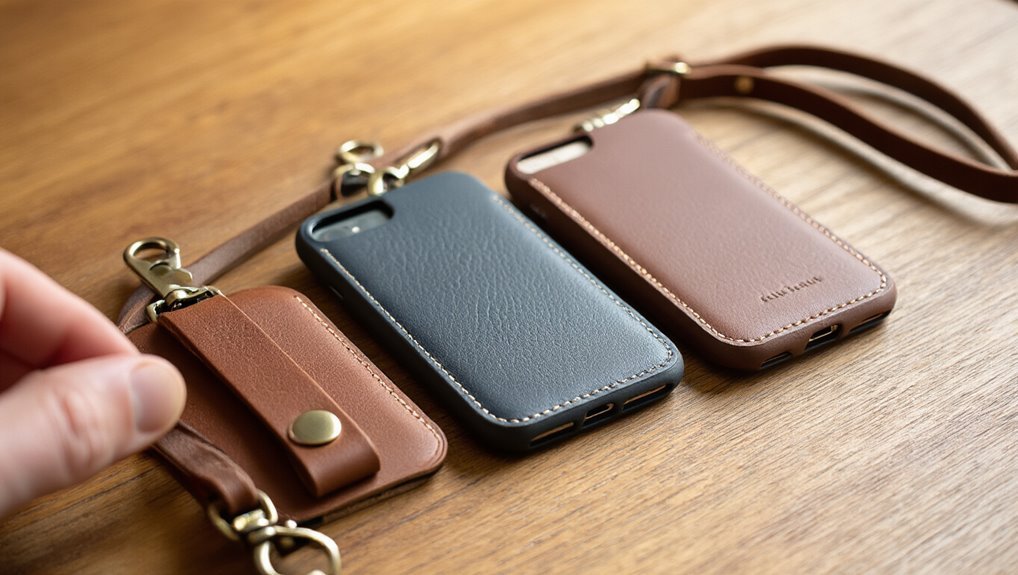
Buyers should measure their wrist circumference to pick a strap that fits snugly without limiting movement.
They should also consider their carrying style—handheld, crossbody, or wrapped on the wrist—to determine the ideal length.
That way they’ll get a secure, comfortable fit.
Measure Wrist Circumference
To choose the right strap length, measure the wrist circumference where the phone will sit—usually just below the wrist bone—using a flexible tape or a strip of paper and a ruler; record that measurement and add about 1–2 cm for comfort and movement.
They recommend simple wrist measurement techniques and accurate sizing methods: wrap the tape snugly without compressing skin, or mark and measure a paper strip.
Repeat twice and average results to avoid errors.
Consider wrist flexibility and clothing layers when deciding the final addition. If the strap is adjustable, pick a size allowing the phone to rest comfortably without swinging.
Store measurements for future purchases and compare them to manufacturer size charts before ordering a strap.
Consider Carrying Style
One’s preferred carrying style determines the ideal strap length, so they should match strap choice to how the phone will be used—shorter straps suit wrist or hand carry for quick access and stability. Mid-length straps work for shoulder carry and prevent bouncing, and long straps are best for crossbody wear to keep the phone secure and hands-free.
The buyer assesses daily routines: commuters favor crossbody straps to free hands, while those who multitask prefer wrist straps for instant reach. Adjustability matters; detachable links or sliding buckles let users tailor fit for layered clothing.
Designers track fashion trends, but smart shoppers prioritize ergonomics and durability. A strap can signal personal expression, so selecting color, texture, and hardware balances comfort with style and its practical function.
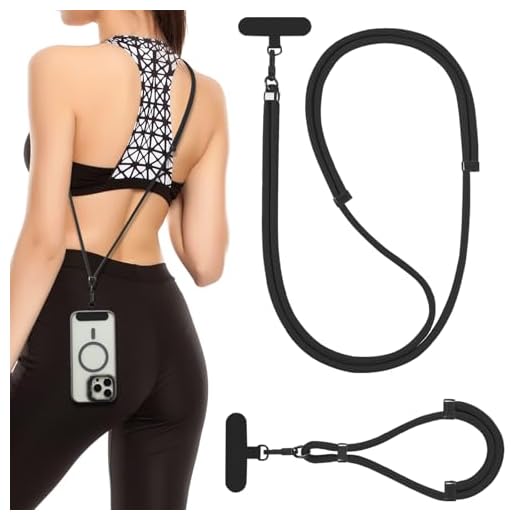


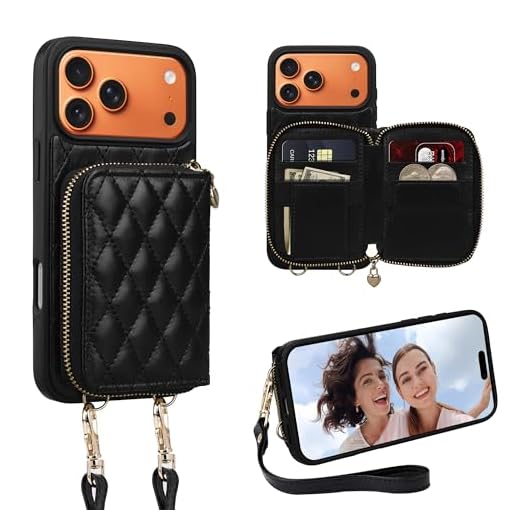

Secure Attachment Options and Fastenings
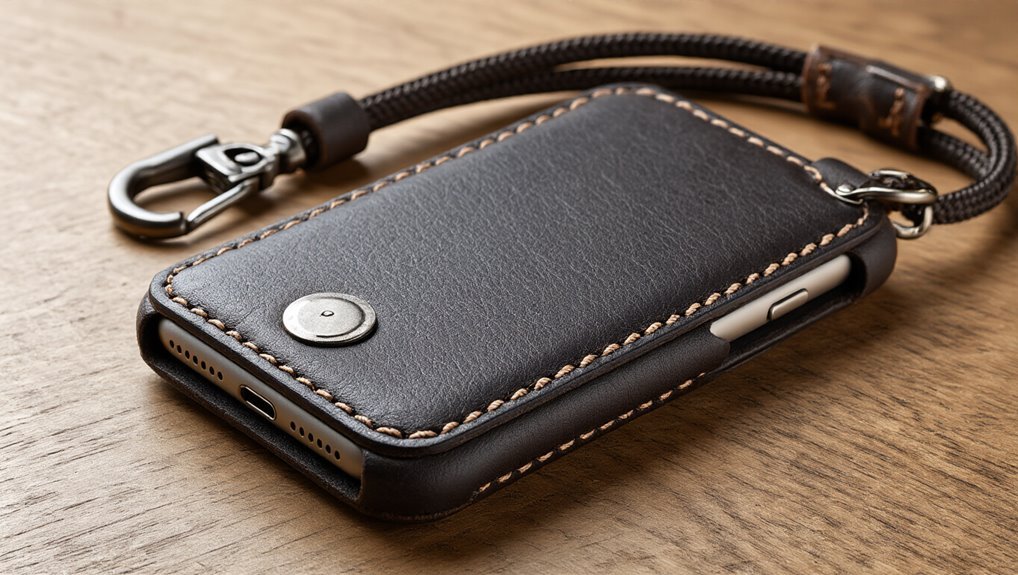
While designing an iPhone cover with a strap, manufacturers prioritize secure attachment options and reliable fastenings that prevent drops without adding bulk.
They test anchor points, metal rings, reinforced loops, and integrated rail systems to guarantee a secure attachment under torsion and impact. Fastening mechanisms range from quick-release buckles and carabiner style clips to snap buttons and magnetic clasps, each balanced for strength, ease and low profile.
Detachable straps use reinforced connectors and locking gates to stop accidental release, while fixed straps rely on bonded or riveted mounts for longevity.
Materials like stainless steel, anodized aluminum and high-tenacity webbing resist wear and corrosion, and designers specify load ratings and fatigue cycles.
Users get clear guidance on compatible replacements and manufacturer approved repairs so integrity isn’t compromised. This focus on tested hardware and transparent specs helps users trust that the cover’s strap will secure their device during everyday use.
Styling a Strap Case for Work and Play
Balance is key: a strap case can shift from boardroom to weekend with a few deliberate choices. The wearer picks neutral colors and matte finishes for meetings, then swaps to brighter tones or patterns for leisure.
Contemporary strap design trends favor slim profiles, detachable straps, and mixed materials—leather, nylon and metal accents—that match both suits and streetwear. Attention to hardware and minimal branding keeps the look professional, while interchangeable straps enable quick personality shifts without changing the case.
For versatile styling, balance texture and proportion: a thin strap reads refined, a wider woven band feels casual. Coordinating strap width with bag handles and footwear creates cohesion.
They also consider scale—small phones suit delicate straps; larger models need sturdier designs. Good styling prioritizes practicality but doesn’t sacrifice aesthetics, so choices stay intentional, adaptable and polished.
Simple maintenance extends lifespan, keeping colors vivid and hardware functioning through a simple routine.
Hands‑Free Uses and Everyday Scenarios
A strap-equipped iPhone cover keeps hands free for carrying bags and scanning items during shopping, so users don’t fumble at checkout.
On commutes it rides across the body for quick access to cards and transit apps without digging through a bag.
Travelers appreciate the secure, grab-and-go setup that lets them navigate airports and sightseeing with one less thing in hand.
Hands-Free Shopping
Because the strap keeps the phone secure and within reach, shoppers can carry bags, push a cart, or handle kids without juggling a device. The cover with strap delivers clear hands free benefits and boosts shopping convenience, so users don’t lose focus on choices and safety.
It tucks into routines: checking lists, comparing prices, or snapping product photos while keeping hands free.
- Relief when hands are full
- Confidence during crowded aisles
- Joy at capturing spontaneous finds
- Calm while managing kids and carts
The strap also reduces drops and frantic searches, letting shoppers move efficiently. It fits pockets or loops for quick access, and it complements grocery runs, mall trips, and errands without interference.
Shoppers appreciate practical design that adds security and everyday ease now.
Commuting and Travel
After simplifying shopping trips, the strap proves equally useful during commutes and travel: it keeps phones secure on crowded trains, frees hands for bags and tickets, and lets commuters check maps or take calls so they don’t dig.
Commuters appreciate commuting convenience when the strap slings a phone crossbody or around a wrist, reducing pickpocket risk and streamlining movement through stations.
Travelers value travel safety since the strap keeps devices visible and attached during transfers, while quick adjustments let users capture photos or consult apps without setting the phone down.
It also aids accessibility for riders with mobility aids, and lets commuters handle receipts, transit cards, or a child’s hand without fumbling.
The strap integrates with daily routines and travel plans and urban adventures.
Cleaning, Care, and Longevity Tips
While regular handling exposes an iPhone cover with strap to oils and dirt, simple maintenance routines keep it functional and looking new.
One should follow cleaning techniques and care routines: wipe with a microfiber cloth, use mild soap and water for deeper cleans, avoid harsh chemicals, and let it air dry fully.
Straps benefit from occasional gentle scrubs and leather conditioners when it’s appropriate.
Inspect hardware and stitching monthly to catch wear early, and store the phone away from extreme heat or moisture.
Replace the strap at the first sign of fraying to prevent drops.
Emotional attachment grows when the cover still feels reliable; these small acts protect memories and convenience.
Practical habits extend lifespan and save money.
- Feel the reassurance of a clean, secure grip.
- Smile at a cover that looks fresh.
- Relish the confidence of tested durability.
- Cherish the seamless daily protection.
Top Brands and Recommended Models
When shoppers hunt for an iPhone cover with a strap, they want durability, comfort, and secure hardware—brands like Apple, Mous, Spigen, and Bellroy consistently deliver, each with distinct strengths.
Apple offers snug fit and clean aesthetics, with streamlined strap functionality that pairs well with MagSafe accessories.
Mous focuses on impact protection using AiroShock tech; its detachable straps and rugged builds suit active users.
Spigen balances price and protection, providing versatile strap anchors and slim profiles for everyday carry.
Bellroy prioritizes premium materials and refined straps that age gracefully.
For rugged outdoor use, UAG and OtterBox add reinforced corners and locking strap points.
For fashion-forward options, Nomad and Native Union combine leather and woven straps.
Brand comparisons should weigh protection level, strap placement, attachment security, and warranty.
Shoppers will find a recommended model by matching use case to brand strengths rather than chasing a single “best” option for many.
DIY Customization and Personalization Ideas
Although mass-market cases are convenient, DIY customization lets users tailor strap placement, materials, and aesthetics to their needs. Simple swaps like braided paracord, leather wraps, or decorative charms can boost comfort and style, while small mods—adding adhesive card sleeves, sewing a fabric loop, or securing a metal ring with epoxy—improve function.
Enthusiasts mix colors, textures, and prints to create personalized designs that reflect identity. They’re choosing strap embellishments—tassels, beads, or metal accents—to add flair without bulk. Practical tweaks include reinforcing attachment points, trimming straps for better hand fit, and lining slim cases with foam for shock absorption.
The process is affordable, creative, and hands-on, so users gain a familiar accessory.
- Joy of crafting a one-off piece
- Pride when friends notice the detail
- Comfort from a strap fitted just right
- Surprise at a tiny, expressive embellishment
Clear instructions, basic tools, and patience make customization rewarding.
Where to Buy and Typical Price Ranges
Where can buyers find strap-equipped iPhone cases and what do they cost? Buyers can turn to online retailers for broad selection, from budget silicone straps to designer leather models; prices range roughly $10–$60, with mass-market brands clustering at $10–$30 and premium labels reaching $40–$100 or more for limited editions. Shipping and taxes affect final cost.
In-person shoppers will find options at local shops, electronics stores, carrier outlets, and boutique retailers; these venues often carry mid-range cases ($20–$50) and let customers test fit and texture.
Custom strap cases or artisan pieces typically cost extra, reflecting materials and labor. Seasonal sales, coupon codes, and bundle deals can lower prices, while warranty and return policies add value.
Buyers should compare specs—material, strap attachment, and compatibility—between online listings and local shop inventory to match budget and durability needs. They’ll often pay more for brand name and unique features, so prioritize needs first.
Frequently Asked Questions
Do Strap Cases Interfere With Wireless Charging?
They usually don’t interfere with wireless charging unless the strap or added hardware contains metal or thick components.
Manufacturers design cases to allow charging, but some case materials like thick leather, metal plates, or magnetic mounts can block or reduce efficiency.
Users should check specs and test on their charger; removable straps or thin synthetic materials generally work fine, while embedded magnets or bulky attachments can cause problems sometimes though.
Are Strap Cases Compatible With Magsafe Accessories?
They can be compatible with MagSafe, but it depends on the design and magnet placement.
Manufacturers often balance strap case advantages like grip and security with magnet alignment, so some strap case designs include built‑in MagSafe magnets while others don’t.
Buyers should check specs and try the accessory to confirm charging and magnetic hold.
If magnets are absent or misaligned, MagSafe accessories won’t attach or charge reliably or work properly.
Can a Strap Case Trigger Airport Security or Metal Detectors?
Yes, a strap case can sometimes trigger metal detectors, but it usually won’t cause major delays.
Security staff follow airport procedures and may ask the traveler to remove the phone for separate screening.
Detection depends on strap materials, embedded hardware or magnets; cloth or silicone straps rarely alarm, while metal components or heavy buckles increase chances.
Travelers should pack devices accessibly so staff can inspect them quickly and avoid surprises.
Will Using a Strap Case Void My Phone’s Manufacturer Warranty?
No, using a strap case generally won’t void the manufacturer’s warranty.
Manufacturers focus on defects and damage caused by the user, so they won’t deny coverage for an accessory unless it directly causes harm.
The owner should document warranty implications by checking terms and keeping receipts.
They should also assess strap durability to avoid accidents that could lead to excluded damage.
If damage occurs, they’ll submit a claim with evidence.
Are Strap Cases Made From Recyclable or Eco‑Friendly Materials?
They’re often made from eco friendly materials, but it varies by brand.
Manufacturers use recycled plastics, biodegradable TPU, cork and plant-based leathers, and some pursue sustainable production with low-impact dyes and reduced waste.
Shoppers should check labels and certifications; transparent brands list material sources and carbon footprints.
If a company claims sustainability yet hides details, consumers shouldn’t assume eco credentials.
Responsible makers publish clear evidence and third-party verification regularly audited.
Conclusion
Readers who’ve explored strap cases will find they combine hands‑free convenience with reliable protection, and they’ll suit commutes, travel, and social outings. They can pick styles and materials to match function and fashion, choose strap lengths for comfort, and trust secure fastenings to keep devices safe. With simple care and occasional customization, a strap case becomes a long‑lasting accessory that elevates everyday use without sacrificing practicality or personal style. They’re worth the modest investment always.

 Amazon.com







The best iPhone cases for style and protection: our top picks for the iPhone 17 and Air Good Housekeeping...
The 15 Best iPhone Cases for 2025 | Reviews by Wirecutter The New York Times...
The 7 Best iPhone Cases of 2025 | Tested & Rated techgearlab.com...
The 23 best crossbody bags for everything from daily errands to travel Business Insider...
The best phone straps: 15 stylish and practical picks to keep your device close and your hands free The Guardian...
The 25 Best iPhone 16 and iPhone 16 Pro Cases for 2025 CNET...
Get Ready For Summer With the 10 Most Comfortable and Durable Beach Chairs We’ve Tested Travel + Leisure...
The 6 Best iPhone 16 Cases of 2025 techgearlab.com...
The 6 Best Camping Chairs of 2025 | Reviews by Wirecutter The New York Times...
The 7 Best Dry Bags of 2025 GearLab...